
Roman Blinds on Doors: Why Stack Height Matters
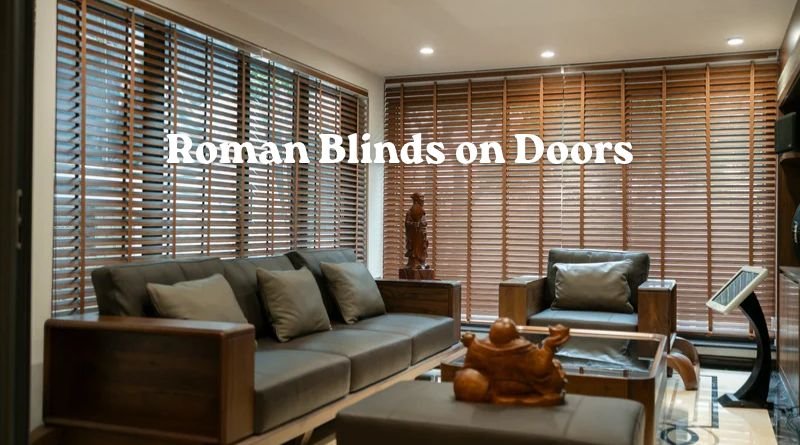
Comparing blind types by appearance alone usually produces a weak shortlist. The better comparison is how each option behaves on the actual opening: how it moves, how much space it uses, how it controls light and how easy it is to live with. The decision is easier when it is broken into the physical opening, the room requirement and the daily routine. In this case the central need is to give readers a practical way to compare blind types using function, operation, fit and maintenance instead of superficial ‘best blind’ lists.. Appearance should refine that solution, not replace it. Stack height is easy to underestimate When a Roman blind raises, the fabric remains as a series of folds rather than disappearing into a compact tube. A blind that looks fine when lowered can interfere with the door leaf, handle or frame when opened. A relevant example to compare against those requirements is roman blinds Manchester. It is a soft fabric blind that forms folds as it raises; its main value is a decorative, furnished look, while stack depth at the top and suitability around moving doors should still be checked for the exact opening. Door movement must stay clear A rarely used glazed door and a main garden door should not be specified the same way. A useful comparison also asks what happens after installation. If the blind solves one problem but creates awkward access or constant adjustment, it is not a strong specification. One product route that fits this part of the discussion is vertical blinds. The important point is not the label itself, but whether flexible control across wide glazing and the fitting details suit the room. Frequency of use matters Where headroom or movement is tight, a different blind type can give similar privacy with less stack. The final comparison should include use as well as appearance. Check reach, access to the glass, window movement and how much of the opening remains covered when the blind is raised. Alternative formats may preserve access For comparison, this is individual louvres that rotate and traverse. It can be attractive where flexible control across wide glazing, although the final choice remains dependent on track position, stack-back space and access and the room requirements already discussed. For readers exploring this type of solution in more detail, vertical blinds Leeds. Use the product page to understand the option, then verify measurements, clearances and realistic performance for the property. A practical decision checklist Start with the opening and how it moves Compare daily operation rather than catalogue appearance Check stack, projection and clearance Be realistic about privacy and blackout performance Measure professionally before final specification The best answer should work in ordinary use Before ordering, reduce the decision to four tests: fit, function, operation and realistic performance. If one of those is uncertain, professional measuring or a different product route is more valuable than forcing the first choice to work. Frequently asked questions Which practical criteria matter more than appearance when comparing blind types? Compare fit, operation, light control, privacy, maintenance and how much of the window remains covered when the blind is open. Price and appearance matter, but they should come after the opening has ruled out unsuitable mechanisms. A product that is easy to live with is more valuable than a technically attractive option that is awkward every day. What should I check before choosing roman blinds for my window or room? Check the opening dimensions, recess depth, handles and movement first. Then define the room’s privacy, light and cleaning requirements and how often the blind will be adjusted. Finally, compare the product’s operation and fitting method with those needs instead of choosing from the product name alone. What should I check before choosing vertical blinds for my window or room? Check the opening dimensions, recess depth, handles and movement first. Then define the room’s privacy, light and cleaning requirements and how often the blind will be adjusted. Finally, compare the product’s operation and fitting method with those needs instead of choosing from the product name alone. Why is professional measuring and fitting important for made-to-measure blinds? Professional measuring checks more than nominal width and drop. Recess depth, squareness, handles, vents, fixing surfaces, opening direction and adjacent blinds can all affect the final fit. A good appointment should also connect those measurements with the way the room and window are actually used. Can the same blind solution be suitable for every room in a home? Not necessarily. Similar-looking windows can serve rooms with very different needs, and the same room may have openings with different sun exposure or access. Consistent colours or finishes can create visual cohesion without forcing every window to use the same mechanism.