
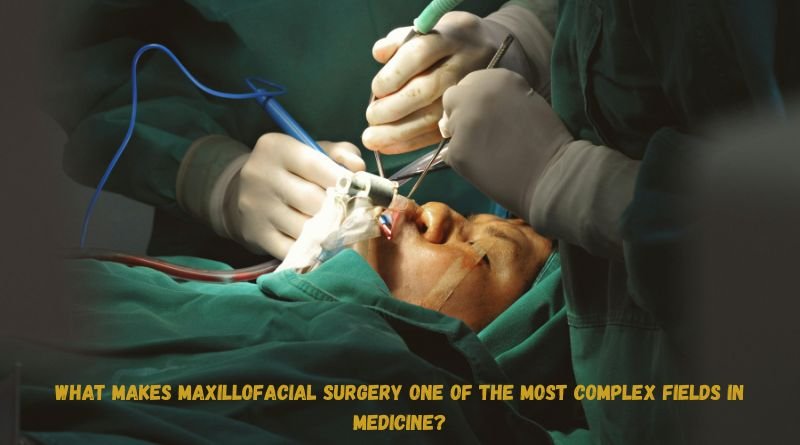
In modern healthcare, some specialties deal with a single organ or system. Others, however, sit at the intersection of multiple disciplines. Maxillofacial surgery is one of those rare fields that combines elements of dentistry, orthopedics, neurology, and airway medicine—making it one of the most complex and multidisciplinary areas in surgical care.
Understanding why this specialty is so intricate helps explain why certain jaw and facial conditions require a highly specialized approach rather than standard treatment.
A Unique Blend of Medicine and Dentistry
Maxillofacial surgery is not limited to teeth or cosmetic facial procedures. It focuses on the bones, joints, and soft tissues of the face, including:
- the upper and lower jaws
- the temporomandibular joints (TMJ)
- facial bones and structure
- oral cavity and surrounding tissues
- airway-related anatomy
Because these areas are closely connected, treating one problem often requires evaluating several systems at the same time.
For example, a patient with jaw pain may also have bite instability, joint degeneration, and airway restriction—all contributing to the same set of symptoms.
The Challenge of Diagnosing Jaw and Facial Conditions
One of the most difficult aspects of this field is diagnosis. Symptoms related to the jaw often overlap with other conditions, making it harder to identify the root cause.
Patients may report:
- headaches that feel like migraines
- ear discomfort without infection
- facial pain that mimics nerve issues
- difficulty chewing or speaking
- unexplained fatigue due to poor sleep
These symptoms can lead patients to multiple specialists before the underlying structural issue is recognized.
A skilled evaluation must determine whether the problem is:
- muscular
- joint-related
- skeletal
- airway-related
- or a combination of these factors
The Role of the Temporomandibular Joint (TMJ)
The TMJ is one of the most complex joints in the human body. It allows both rotational and sliding movements, enabling the jaw to function smoothly.
When this joint becomes damaged or unstable, it can lead to:
- pain during movement
- jaw locking or restricted opening
- clicking or grinding sounds
- changes in bite alignment
In advanced cases, degeneration of the joint can alter the position of the jaw itself, affecting facial symmetry and function.
This is why TMJ disorders are often a central focus in complex maxillofacial cases.
Why Jaw Structure Affects More Than the Face
Another factor that makes this specialty unique is the connection between jaw structure and overall health.
The position of the jaws can influence:
- airway size and breathing
- tongue posture
- muscle tension in the face and neck
- long-term joint stability
For example, a retruded lower jaw may reduce airway space, potentially contributing to sleep-related breathing disorders. Similarly, an unstable bite can lead to chronic muscle strain and headaches.
These connections mean that treating jaw problems is not just about comfort—it can impact broader health outcomes.
The Complexity of Surgical Planning
Unlike many surgical procedures that focus on a single area, maxillofacial surgery requires comprehensive planning.
Before treatment, specialists often evaluate:
- facial proportions and symmetry
- jaw alignment in three dimensions
- bite relationship between upper and lower teeth
- TMJ condition
- airway structure
Advanced imaging techniques, such as 3D scans, allow surgeons to simulate outcomes and plan precise corrections.
The goal is not only to correct the visible problem but to ensure long-term stability and function.
When Revision Cases Add Another Layer of Complexity
Some of the most challenging cases in this field involve revision surgery—when a patient has already undergone treatment but continues to experience problems.
Revision cases may involve:
- altered anatomy from previous procedures
- scar tissue affecting movement
- unresolved TMJ pathology
- bite relapse over time
These situations require even more detailed analysis and planning, as the surgeon must work with structures that have already been modified.
Why Experience Matters in Complex Cases
Because maxillofacial conditions can involve multiple systems, experience plays a critical role in achieving successful outcomes. Specialists must understand not only surgical techniques but also how different anatomical components interact.
Patients with advanced jaw conditions, TMJ disorders, or complex structural issues often seek evaluation from an experienced Maxillofacial Surgeon who focuses on comprehensive diagnosis and treatment of these challenging cases.
Final Thoughts
Maxillofacial surgery stands apart because it treats one of the most functionally complex regions of the body. The face is not just about appearance—it is central to breathing, eating, speaking, and overall well-being.
Addressing problems in this area requires a deep understanding of anatomy, function, and long-term stability. With advances in imaging, surgical techniques, and treatment planning, patients with even the most complex jaw and facial conditions now have access to more precise and effective care than ever before.